Waghodia Bus Depot serves a taluka headquarters that punches well above its size in industrial terms — a town of roughly 13,000 people that also happens to host GIDC facilities for global names like Apollo Tyres and Munjal Auto Industries, the latter recognized as one of the world’s largest manufacturers of exhaust systems for two-wheelers. This GSRTC depot moves students, factory workers, and traders between Waghodia and Vadodara daily, functioning as the essential link between a quiet taluka town and Gujarat’s third-largest city just 28 kilometres away.
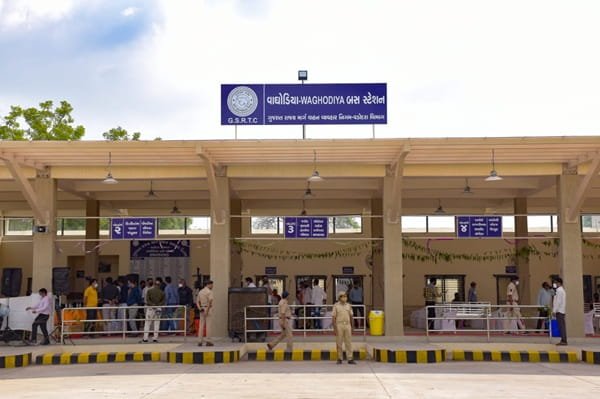
Waghodia Bus Depot Overview
| Detail | Information |
| Operated By | Gujarat State Road Transport Corporation (GSRTC) |
| Location | Waghodia, Vadodara district, Gujarat 391760 |
| Distance to Vadodara | Approximately 22-28 km |
| Journey Time to Vadodara | Roughly 50 minutes |
| Daily Vadodara-Waghodia Services | 21+ daily departures |
| Key Industries Nearby | Apollo Tyres, Munjal Auto Industries, Gujarat Cycles |
| Bus Categories Available | Volvo, AC, Non-AC, Sleeper, Seater |
A Taluka Headquarters With a Global Auto-Parts Footprint
Waghodia holds administrative significance as one of the taluka headquarters of Vadodara district, serving as a hub for the surrounding villages even as it maintains a fairly modest population of its own. What sets this town apart from many similarly sized taluka centres is its industrial estate — Waghodia GIDC houses facilities for internationally recognized manufacturers, including Apollo Tyres and Munjal Auto Industries, the latter known specifically for producing exhaust systems used in two-wheelers across global markets.
This combination of small-town character and significant industrial presence shapes the bus depot’s daily rhythm considerably. Factory workers commuting between residential areas and the GIDC estate mix with students traveling to colleges in Vadodara, traders managing business between the two towns, and residents handling the routine errands that come with living near, but not directly in, one of Gujarat’s major cities.
Locating the Depot
Waghodia’s bus depot sits centrally within the town, positioned along the Vadodara-Waghodia Road (State Highway 158) that connects this taluka headquarters to the district capital.
- The depot lies roughly 22-28 kilometres from central Vadodara, depending on the specific route taken.
- Waghodia GIDC, the town’s significant industrial estate, sits nearby, drawing much of the depot’s factory-worker ridership.
- The town functions as a service centre for surrounding villages, meaning local transport connections extend beyond just the Vadodara corridor into the broader taluka.
- No railway station serves Waghodia directly within a close radius, making Vadodara the practical rail connection point for anyone combining bus and train travel.
Routes and Connections to Vadodara
The dominant route from Waghodia Bus Depot connects directly to Vadodara, reflecting how deeply intertwined daily life in this taluka town is with the district capital.
- Vadodara: The primary corridor, with more than 21 daily services covering the roughly 22-kilometre distance in about 50 minutes, offered across a genuinely wide range of bus categories.
- Ahmedabad: Longer-distance services connect Waghodia toward Gujarat’s largest city, useful for business and family travel across the state.
- Visnagar, Unjha, and Sidhpur: Regional connections extending toward north Gujarat, part of GSRTC’s broader network linking taluka towns across the state.
- Palanpur and Deesa: Additional routes reaching further into north Gujarat, serving passengers with business or family ties in that region.
- Local services also connect Waghodia to nearby villages and smaller settlements within the taluka, supporting its role as an administrative and commercial centre for the surrounding rural area.
Given how central the Vadodara corridor is to daily life here, most travelers using this depot are making that specific 22-kilometre journey, whether for work, education, healthcare, or shopping needs that the smaller taluka town can’t fully meet on its own.
Timings and Frequency
Bus timings on the Waghodia-Vadodara corridor reflect the route’s importance as a genuine daily commuter link rather than an occasional long-distance journey.
- Services between Vadodara and Waghodia run frequently throughout the day, with more than 21 daily departures spread across morning, afternoon, and evening slots.
- Buses on this corridor depart from as early as 8:55 AM through to around 11 PM, giving commuters considerable flexibility depending on their schedule.
- Reverse-direction services from Waghodia to Vadodara also run regularly, supporting the daily flow of workers and students heading into the district capital.
- Given the corridor’s popularity, checking specific departure times in advance helps avoid unnecessary waiting, particularly during peak morning and evening commuting windows.
GSRTC Service Categories on This Corridor
One of the more notable aspects of the Waghodia-Vadodara route is the genuine range of bus categories available for what is, ultimately, a fairly short intercity hop.
- Volvo services offer a premium, more comfortable option for this corridor, generally commanding a higher fare in exchange for added comfort.
- AC and Non-AC Seater buses provide standard options at different comfort and price points, suitable for the roughly 50-minute journey.
- Sleeper services are also available on this route, somewhat unusual for a journey this short, though useful for travelers connecting onward to longer overnight destinations.
- Gurjarnagri services, a GSRTC category name specific to certain routes, appear among the options for travelers heading between Waghodia and destinations beyond Vadodara.
This variety reflects how GSRTC treats the Waghodia-Vadodara corridor less as a simple local commuter route and more as a genuine intercity connection with its own dedicated service tier, likely a reflection of the steady demand generated by the town’s industrial workforce and student population.
Facilities at the Depot
- Ticket counters supporting GSRTC’s range of bus categories, from basic Non-AC seater to premium Volvo and Sleeper options
- Basic waiting infrastructure suited to a taluka-level depot, serving both daily commuters and longer-distance travelers
- Local transport connections extending into the town and surrounding villages for passengers whose final destination lies beyond the depot itself
- Long-standing local familiarity with the depot as a practical daily transit point, particularly among students relying on regular bus passes for their Vadodara commute
Practical Tips for Travelers
- If you’re commuting daily between Waghodia and Vadodara, look into GSRTC’s student or regular bus pass options, since the frequency and demand on this corridor make it a well-established daily commute for many residents.
- Book Volvo or Sleeper services in advance if you’re combining this route with a longer onward journey, since these premium categories tend to fill faster than standard seater options.
- Since no railway station serves Waghodia directly, plan your journey around Vadodara as the practical rail transfer point if you’re combining bus and train travel.
- For factory workers commuting to Waghodia GIDC, checking specific shift-aligned bus timings in advance can help avoid unnecessary waiting during less frequent off-peak hours.
Frequently Asked Questions
Q. How long does the bus journey from Waghodia to Vadodara typically take?
The journey covers approximately 22 kilometres and takes about 50 minutes on average, with GSRTC running more than 21 daily services across a range of bus categories including Volvo, AC, Non-AC, and Sleeper options.
Q. Why does a small taluka town like Waghodia have such a wide range of GSRTC bus categories available?
The steady demand generated by Waghodia’s industrial workforce at the GIDC estate, along with students and residents regularly traveling to Vadodara, has made this corridor a genuine intercity route rather than a minor local connection, justifying premium service categories like Volvo and Sleeper buses.
Q. Is there a railway station near Waghodia for combined bus-train travel?
No, Waghodia doesn’t have a nearby railway station, so most travelers combining rail and road journeys use Vadodara, roughly 22-28 kilometres away, as their practical transfer point between the two modes of transport.